Your Phone Is Stressing You Out More Than You Think — Here's Where CBD Actually Fits In
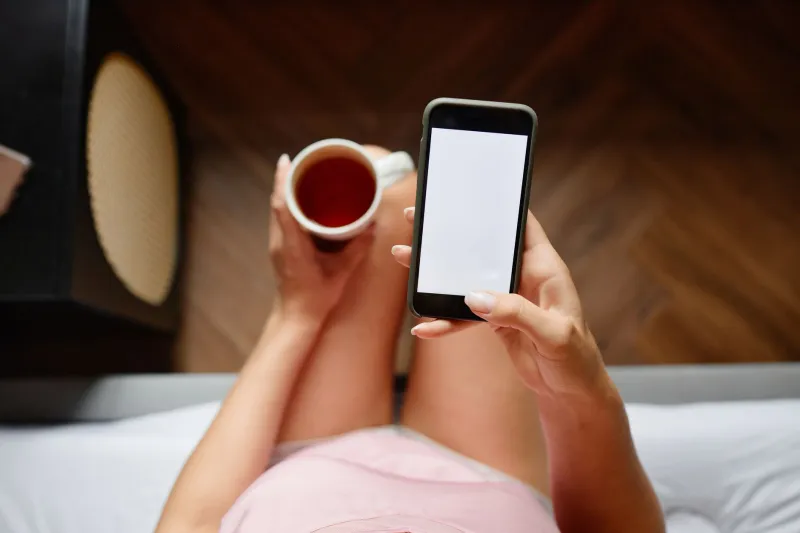
Be honest: when's the last time you sat in silence for five minutes without reaching for your phone?
If that question made you a little uncomfortable, you're in good company. Americans now spend an average of seven hours a day staring at screens — and that number doesn't include time at a work computer. We've built entire lives inside devices that are, by design, engineered to keep us anxious, engaged, and coming back for more.
Here's what nobody in the wellness supplement aisle is going to tell you: CBD is not going to fix your relationship with your phone. But used thoughtfully, as one piece of a genuine digital wellness strategy, it might help your nervous system start recovering from the damage that relationship has already done.
What Constant Connectivity Actually Does to Your Body
This isn't about being anti-technology. It's about understanding the physiology of what's happening when your phone buzzes for the forty-seventh time before noon.
Every notification triggers a small cortisol response. That's not metaphorical — it's measurable. Cortisol is your primary stress hormone, and while it's useful in genuine threat situations, chronic low-grade spikes from social media alerts, email previews, and breaking news banners keep your HPA axis (the hypothalamic-pituitary-adrenal system responsible for stress regulation) in a state of perpetual low-level activation. Over time, this contributes to what researchers call "allostatic load" — the cumulative physiological wear of chronic stress.
The sleep piece is even more direct. Blue light from screens suppresses melatonin production by signaling to your brain that it's still daytime. A 2014 study published in PNAS found that people who read on light-emitting devices before bed took longer to fall asleep, experienced less REM sleep, and felt groggier the next morning compared to those who read printed books. Your circadian rhythm isn't a suggestion — it's a biological system that modern screen habits are actively disrupting.
And then there's inflammation. Chronic psychological stress — the kind that comes from always being reachable, always being reactive — is linked to elevated inflammatory markers. Research published in Biological Psychiatry has connected perceived stress with increases in interleukin-6 and C-reactive protein, two key inflammatory indicators. This is how mental stress becomes physical over time.
Where CBD Actually Enters the Picture
Okay, so now we can talk about CBD — and be specific about where it's genuinely useful versus where it's being oversold.
CBD interacts with the endocannabinoid system, which plays a regulatory role in stress response, sleep architecture, and inflammatory signaling. That's not marketing copy — it's established physiology. The endocannabinoid system acts like a volume knob on many of your body's reactive processes, and CBD appears to support its function.
For someone whose nervous system is chronically overstimulated by digital life, a well-timed CBD routine could help in a few specific ways:
Evening wind-down support. Taking a full-spectrum CBD tincture an hour or two before bed — as part of a deliberate offline ritual — can support the transition from high-alert mode to genuine rest. Paired with dimming your lights and putting your phone across the room, you're giving your body multiple inputs that the day is actually over.
Acute stress moments. A CBD gummy or sublingual dose during a high-anxiety stretch of the workday isn't a replacement for boundaries — but it can take the edge off the cortisol spike while you work on those boundaries.
Inflammation recovery. If your screen habits have contributed to disrupted sleep and chronic stress over months or years, CBD's interaction with inflammatory pathways may support the longer recovery process as you rebuild healthier routines.
But let's be clear: if you take CBD at night and then spend an hour scrolling TikTok in bed, you've undercut most of the potential benefit. The supplement and the behavior change have to work together.
Building an Actual Digital Wellness Strategy
CBD works best as a support layer on top of real structural changes. Here's what that can actually look like in daily life:
Create a phone-free morning window. Even 30 minutes of screen-free time after waking — before you check email or social media — gives your cortisol its natural morning rise without layering on digital stress. This is when a morning CBD routine fits naturally: herbal tea, a tincture, and actual quiet.
Use app limits like you mean it. iOS and Android both have built-in screen time management tools. Setting hard stops on social media apps isn't willpower theater — it's removing the trigger from the environment, which behavioral science consistently shows is more effective than relying on self-control alone.
Protect the two hours before sleep. This is non-negotiable if sleep is a goal. Swap the phone for a book, a short walk, or a conversation with someone in the same room. This is the window where CBD's calming properties pair most effectively with your body's natural melatonin production — as long as you're not simultaneously flooding your retinas with blue light.
Build offline anchors into your week. Nature walks, in-person social time, analog hobbies — these aren't nostalgic indulgences. They're neurological resets that help recalibrate a dopamine system that's been trained to expect constant digital stimulation.
Living Purely in a Plugged-In World
At Pura Vida, we're not going to pretend that a tincture is going to undo years of notification-driven anxiety. That would be dishonest, and honestly, a little insulting to how smart our readers are.
What we do believe is that thriving naturally in 2024 means being intentional about the inputs you allow into your nervous system — digital and otherwise. CBD is one of many plant-based tools that can support that intention. But the intention has to come first.
Put the phone down. Then reach for something that actually helps.