Better Together: The Science Behind Why Whole-Plant CBD Outperforms the Sum of Its Parts
When the Whole Is Greater Than the Sum of Its Parts
There's an old idea in herbalism — one that long predates modern pharmacology — that plants work best when left mostly intact. That the compounds inside them aren't just random passengers; they're collaborators. Science is now catching up to that intuition in a big way, and nowhere is that more evident than in the world of CBD.
The concept at the center of this conversation is called the entourage effect. It's a term that gets thrown around a lot in wellness circles, but what does it actually mean? And more importantly, why should it matter to you when you're standing in a store (or scrolling a website) trying to figure out which CBD product is worth your money?
Let's break it all down — no lab coat required.
What Exactly Is the Entourage Effect?
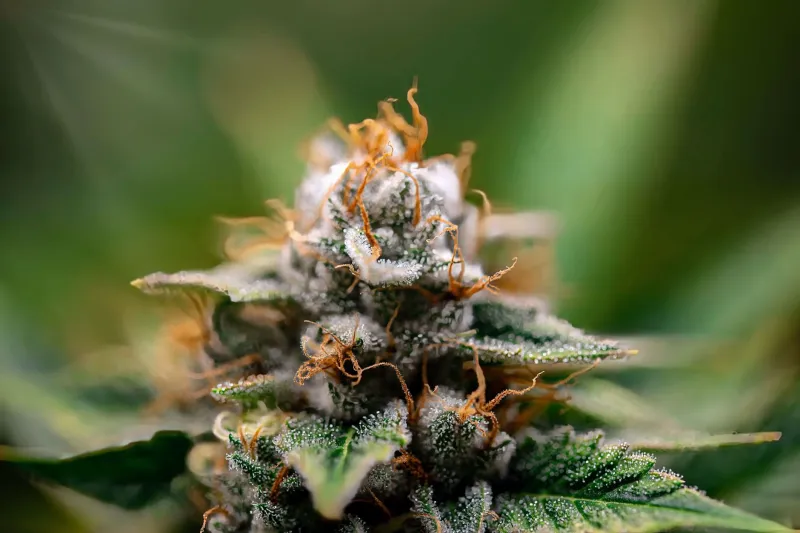
The entourage effect refers to the way that cannabinoids, terpenes, flavonoids, and other naturally occurring compounds in the hemp plant work together to produce effects that are more powerful and nuanced than any single compound could deliver on its own.
Think of it like a jazz band. CBD might be the lead musician — talented, versatile, capable of holding its own. But when you add the rest of the ensemble — the minor cannabinoids like CBG, CBC, and CBN, plus the aromatic terpenes like myrcene, linalool, and beta-caryophyllene — something richer and more dynamic emerges. The music gets better.
This idea was first formally proposed by Israeli researchers Dr. Raphael Mechoulam and Dr. Shimon Ben-Shabat in 1998, and it's been gaining scientific traction ever since. A landmark 2011 paper by neurologist Dr. Ethan Russo published in the British Journal of Pharmacology made a compelling case that cannabinoids and terpenes work synergistically, potentially enhancing each other's therapeutic properties while also softening unwanted side effects.
The Hemp Plant's Hidden Cast of Characters
To understand why this matters, you need to know who's actually in that ensemble.
Cannabinoids are the headliners. CBD (cannabidiol) is the most prominent, but full-spectrum hemp extracts contain dozens of others in smaller concentrations. CBG (cannabigerol) has been studied for its potential role in mood and focus. CBN (cannabinol) is associated with restful sleep. CBC (cannabichromene) may support inflammation pathways. These aren't just filler — they're active participants.
Terpenes are the aromatic compounds that give hemp (and lavender, citrus, pine, and countless other plants) their distinctive smells. But they're far more than just fragrance. Linalool, also found in lavender, is widely associated with calming properties. Myrcene, common in hops and mangoes, may contribute to relaxing, sedative effects. Beta-caryophyllene is unique in that it actually binds directly to CB2 receptors in the body's endocannabinoid system — making it, technically, a dietary cannabinoid.
Flavonoids round out the picture. Compounds like cannflavin A and B are unique to hemp and have been the subject of early research into their potential anti-inflammatory activity.
Together, these compounds don't just coexist — they interact, modulate, and amplify each other's effects within your body's endocannabinoid system.
Full-Spectrum, Broad-Spectrum, Isolate: What's the Difference?
Now that you understand who's in the band, you can make more sense of the product labels you'll encounter.
Full-Spectrum CBD contains the complete profile of naturally occurring compounds from the hemp plant, including trace amounts of THC (legally capped at 0.3% under federal law in the US — not enough to produce any psychoactive effect, but potentially enough to contribute to the entourage effect). This is generally considered the gold standard if you're looking for the full benefit of whole-plant synergy.
Broad-Spectrum CBD goes through additional processing to remove THC while retaining most other cannabinoids and terpenes. It's a middle-ground option — you lose some of the entourage effect without THC in the mix, but you retain more of the plant's complexity than an isolate offers. This is a good fit for people who are subject to drug testing or who prefer to avoid THC entirely.
CBD Isolate is exactly what it sounds like: pure CBD, stripped of everything else. It's the most processed form and, according to the entourage effect research, potentially the least effective for many wellness applications. That said, isolates can be useful for precise dosing and for people with sensitivities to other plant compounds.
A notable 2015 study from the Lautenberg Center for General Tumor Immunology in Jerusalem compared the effectiveness of CBD isolate versus full-spectrum extract. The full-spectrum product showed a dose-dependent response — meaning it continued to improve with higher doses — while the isolate plateaued. The researchers attributed this to the synergistic action of the full plant extract.
Why the 'Whole Plant' Philosophy Aligns With Real Wellness
At Pura Vida CBD, we didn't build our approach around the whole plant just because it sounds good. We did it because it makes sense — both scientifically and philosophically.
Nature rarely works in isolation. Your body doesn't run on a single nutrient. A healthy gut microbiome isn't built on one strain of bacteria. And hemp, a plant that humans have cultivated and used for thousands of years, wasn't designed to be reduced to a single molecule before it enters your body.
The entourage effect is essentially nature's way of saying: trust the process. When you choose a full-spectrum product made from high-quality, clean hemp, you're inviting the whole plant's intelligence into your wellness routine — not just a fragment of it.
What to Look for When Choosing a Full-Spectrum Product
Not all full-spectrum products are created equal. Here's what to keep in mind:
- Third-party lab testing (COAs): Always look for a Certificate of Analysis from an independent lab. It should confirm cannabinoid content, verify THC levels are within legal limits, and screen for pesticides, heavy metals, and solvents.
- Extraction method: CO2 extraction is widely regarded as the cleanest method, preserving the terpene and cannabinoid profile without harsh chemical residues.
- Hemp source: US-grown hemp, ideally from farms using organic or regenerative practices, is your safest bet for quality and transparency.
- Terpene profile: Some brands list their terpene content on their COAs. If yours does, that's a good sign they care about the full-plant picture.
The Bottom Line
The entourage effect isn't a marketing buzzword — it's a scientifically grounded principle that helps explain why whole-plant hemp extracts tend to outperform their isolated counterparts for many people. When cannabinoids, terpenes, and flavonoids work together, they create something your body can recognize, respond to, and genuinely benefit from.
If you've tried CBD before and felt like it wasn't doing much, it might be worth asking: what kind of product were you using? Sometimes the answer isn't a higher dose — it's a better team.